









Looking at history, the action of spreading political content through media outlets like newspapers and television isn’t new. However, with the rise of technology, there has been a higher exposure to political content at a rapid speed with the help of social media. In recent years, social media has become a platform to communicate, share ideas, and inform the public about current events. Social media platforms like TikTok, Instagram, and X allow users to see political content almost instantly.
As more people start to rely on these apps instead of official news sources, the way political information spreads has changed drastically. Algorithms (data-tracking systems that use a person’s search history and browsing habits to show similar content) tend to promote material that already aligns with a user’s existing beliefs. This can shape opinions and even deepen political divides. It can also take political views out of context, distorting people’s understanding of certain topics.
This practice, often referred to as propaganda, is not new. Propaganda dates back to ancient civilizations such as Greece and Persia. It was widely used during World War II and has evolved dramatically in the digital age. With the rise of social media, the spread of false or misleading political content is at an all-time high. This especially impacts younger audiences, who are among the most active social media users. According to the National Institutes of Health, “Approximately 95% of U.S. teens ages 13-17 use social media.”
To understand how social media affects people’s political opinions today, interviews were conducted with frequent users. Andrew Barteau, an active TikTok user, described how algorithms can influence his political perspective. “I have been swayed toward one side because often I see political videos on my For You Page, like on TikTok,” he said. “People are trying to pull me to one side. It’s the algorithm and stuff. It’ll be one right now, trying to pull me to one side, taking things out of context.”
His observation shows how social media algorithms may subtly guide users toward a particular way of thinking without them even realizing it. Barteau added that such exposure “inaccurately sways their opinion because they aren’t getting factual evidence,” emphasizing the danger of consuming political content without verifying its credibility.
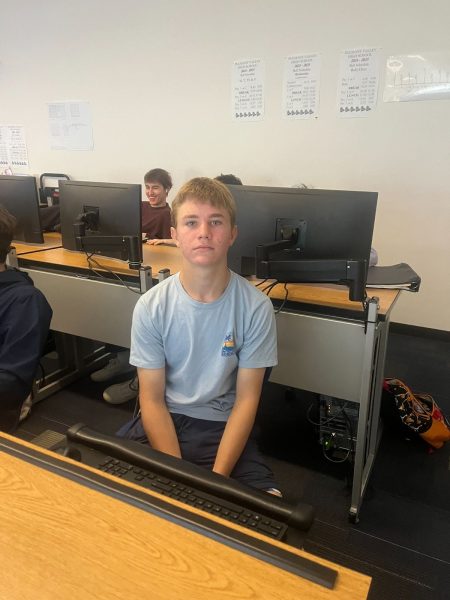
Zach Kaber shared a similar concern about the influence of social media. “I have seen my own political view swayed by social media, especially when I’m on there for more than, say, half an hour at a time,” Kaber explained. “Whatever algorithms Instagram uses–that’s what I primarily use–tend to hone in more on political content as soon as I start seeing a few posts. So, especially with more malinformation or complete misinformation, that can sway political votes and political views. It has swayed mine in the past.”
Kaber went on to add that “social media tends to make people more divided by only informing them of one side–sometimes not even the side they directly support. It’s just whatever side happens to be suggested to them, and then that can sway them, so, in general, it makes them more divided.”
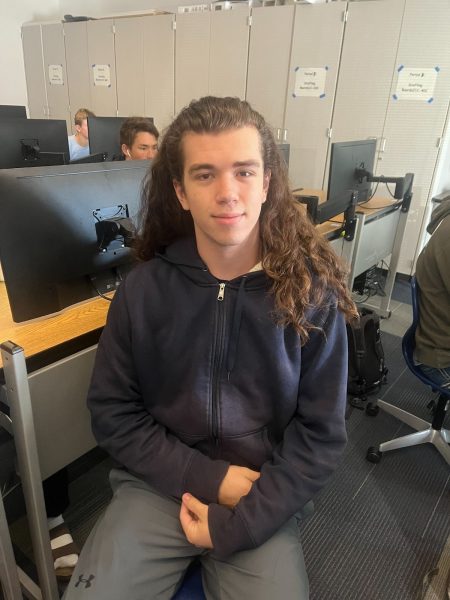
To gain a better understanding of how this issue affects younger audiences, Cayden Mallinger, a junior at PV, shared his perspective on how social media influences teens. “I think social media has a huge impact on teenagers because we’re still figuring out what we believe in,” said Mallinger. “When you scroll through TikTok or Instagram, you see so many opinions, and sometimes it feels like you’re being told what to think before you can decide for yourself.”
He added that because so many teens spend hours online every day, political messages can start to blend in with other types of content–memes, trends–making it difficult to spot bias. “A lot of people my age don’t check where the information is coming from,” he continued. “So when something sounds convincing, they just go with it. That’s how misinformation spreads so fast among teens. We just don’t stop to question it.”

Mallinger’s perspective highlights how impressionable younger users can be in the face of a constant stream of persuasive or biased information. While adults may have more developed critical thinking skills, teens are more likely to absorb political content without distinguishing fact from fiction, especially from influencers or viral videos that appear credible.
Both interviews and personal accounts reflect a growing concern over how social media algorithms shape public opinion and deepen political polarization. As users continue to depend on platforms like TikTok and Instagram for news and information, they are often exposed to selective or misleading content that reinforces preexisting beliefs.
The combination of propaganda, misinformation, and algorithm-driven exposure has created an environment where political understanding is often filtered through bias rather than fact. For teens and young adults, this influence can be especially powerful in shaping not only their political opinions, but also the way we perceive the world around us.